
Feline Chronic Gingivostomatitis (FCGS)
Understanding and Managing This Painful Oral Condition at Animal Medical of New City
Make An Appointment
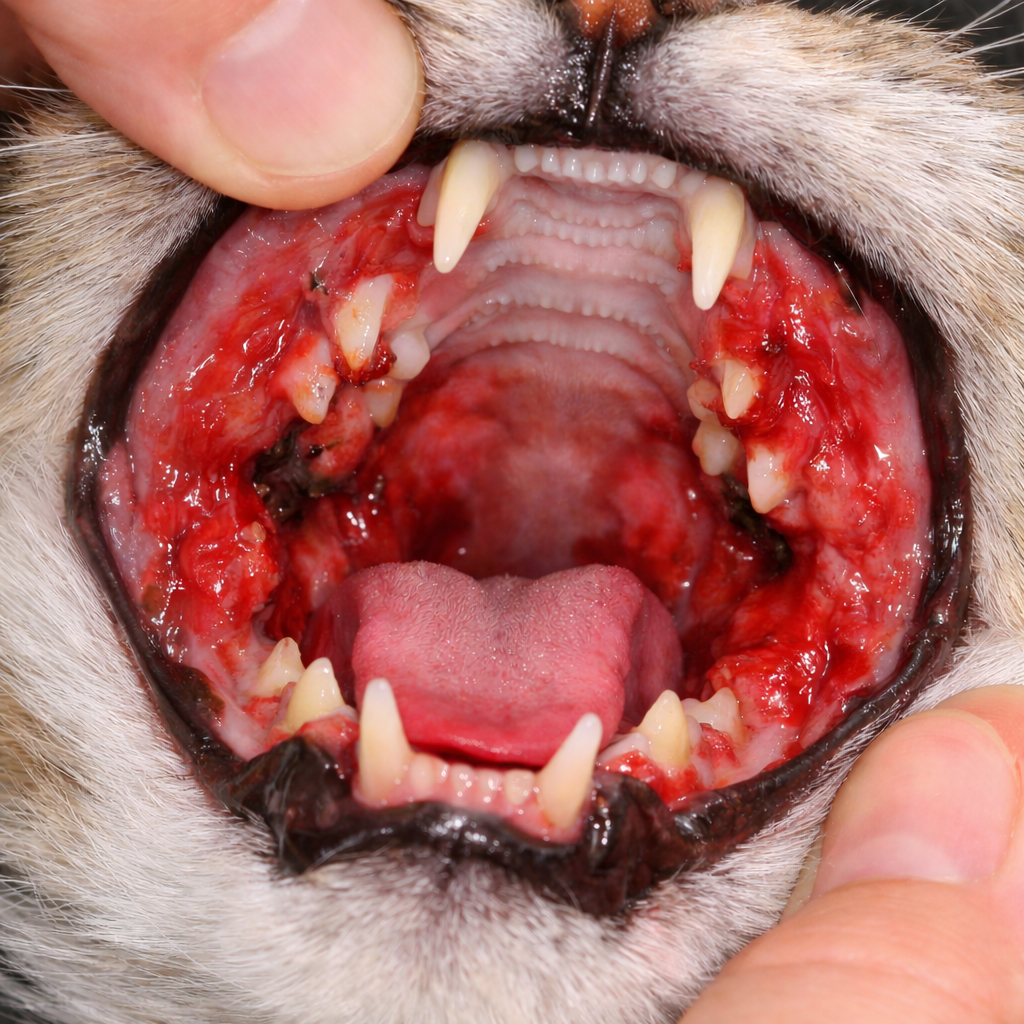
At Animal Medical of New City, our compassionate team—led by Dr. Ashley Gillman, along with Dr Howard Gittelman, Dr. Schenkel, Dr. Gillman, Dr. Romolini, Dr. Suganuma, and our dedicated staff, is deeply committed to improving the quality of life for cats suffering from painful oral diseases. With over 60 years of combined veterinary experience and AAHA accreditation, we prioritize progressive, evidence-based care for conditions like feline chronic gingivostomatitis (FCGS), also known as stomatitis. This debilitating, immune-mediated inflammatory disease affects the gums, mouth lining, and often the back of the throat, causing severe pain that can lead to drooling, difficulty eating, weight loss, bad breath, and behavioral changes like irritability or hiding.
What Causes Feline Chronic Gingivostomatitis?
The exact cause of FCGS remains a puzzle, but research points to a multifactorial process. A key player is an inappropriate, exuberant immune response to chronic antigenic stimulation in the mouth, often triggered by plaque bacteria, dental disease, or viral infections. Feline calicivirus (FCV) is strongly associated, appearing in a high percentage of affected cats (sometimes up to 50-90% in studies) and contributing to persistent inflammation, though not all FCV-positive cats develop FCGS. Other factors may include bacterial imbalances (dysbiosis), environmental stressors (especially in multi-cat homes), genetic predisposition, or concurrent conditions like periodontal disease.
Cats with underlying FeLV (feline leukemia virus) or FIV (feline immunodeficiency virus) often experience more severe or refractory forms due to their compromised immune systems.
FCGS can present in various ways, including:
- Severe gingivitis (inflamed gums)
- Periodontitis (deeper gum and bone involvement)
- Gingival hyperplasia (overgrowth of gum tissue)
- Extensive mucositis/stomatitis (inflammation of the oral mucosa), often concentrated around the oropharyngeal fauces (back of the mouth, including the tonsillar pillars and sides of the tongue base)
There is significant overlap between cats with advanced periodontitis and those that progress to full-blown stomatitis/mucositis, but the latter tends to be more resistant to standard treatments.
Why some cats develop severe FCGS while others with similar exposures do not is still not fully understood; it is likely involving individual immune differences and triggers.
Treatment Challenges and Options
Routine dental cleanings (prophylaxis) and home oral care are rarely sufficient on their own. Cats with FCGS are often in constant pain, making owner compliance with brushing or applying gels extremely difficult. Medical management alone (e.g., antibiotics, anti-inflammatories, or pain relief) typically provides only temporary relief and is not curative.
The gold standard treatment remains surgical extraction of teeth to remove the primary source of bacterial/antigenic stimulation:
Partial-mouth extraction (all premolars and molars, or “caudal” teeth) or full-mouth extraction resolves or dramatically improves clinical signs in 67-90% of cases, based on multiple studies.
Success is higher when performed early and comprehensively.
About 20-30% of cats remain partially or fully refractory, requiring ongoing support.
For cats that don’t fully respond (refractory cases), or as adjunctive therapy, we consider immunomodulatory options to calm the overactive immune response:
Corticosteroids (e.g., prednisolone) or cyclosporine for immunosuppression.
Recombinant feline interferon-omega (not available in the USA) to modulate inflammation and potentially inhibit viral replication.
Pain management (e.g., buprenorphine, gabapentin) and supportive care are essential.
A Promising New Option on the Horizon: Ready-to-Use Stem Cell Therapy
One of the most exciting developments is a new kind of treatment using stem cells from healthy donor cats (called allogeneic or “ready-to-use” therapy). These special cells are given through simple intravenous administration, usually two doses a few weeks apart, help calm the cat’s overactive immune system, reduce painful inflammation in the mouth, and help healing happen naturally.
In studies, this approach has helped most cats feel much better, with many showing big improvements in eating, comfort, and overall happiness, even when extractions alone weren’t enough. It’s generally very safe, with few side effects reported.
A leading company, Gallant, is developing this therapy specifically for cats with tough-to-treat FCGS. As of early 2026, they’ve made strong progress with the FDA, completing key safety and effectiveness reviews. They’re on track for potential FDA conditional approval sometime in early-to-mid 2026, which could make it the first approved ready-to-use stem cell treatment in veterinary medicine.
We are closely monitoring this progress and plan to offer this innovative option in-house as soon as it becomes available, allowing us to provide comprehensive, cutting-edge care for your cat right here in New City.
Our Approach at Animal Medical of New City
We tailor treatment to each cat’s needs after a thorough exam under anesthesia, including dental X-rays and viral testing (FeLV/FIV). Our goal is always pain relief, restored appetite, and better quality of life, whether through extractions, medical support, or emerging therapies like stem cell treatment.
If your cat shows signs of oral pain, excessive drooling, or reluctance to eat, don’t wait; early intervention makes a big difference. Schedule a consultation by calling or texting (845) 638-3600. We’re here to help your feline companion feel comfortable and happy again, and we’ll keep you updated on advancements like stem cell therapy.